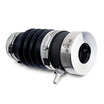
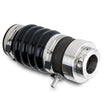
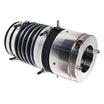
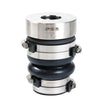

Type B Shaft Seal
Description
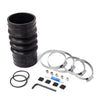
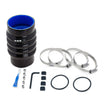
The PSS Type B Shaft Seal is a heavy-duty marine shaft seal engineered for commercial vessels such as tugboats, ferries, and workboats. Designed for shaft diameters from 4" to 6 1/2" (100mm–165mm), this seal provides superior protection against water intrusion and eliminates the need for traditional packing glands.
Key Features:
- Reliable Marine Seal: Creates a watertight barrier between a rotating stainless-steel rotor and a stationary carbon flange.
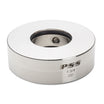
- Commercial-Grade Durability: Nitronic 50 stainless steel rotor and high-density carbon stator for maximum wear resistance and corrosion protection.
- Reinforced Bellows: Multi-ply silicone bellows with stainless steel rings for added strength and longevity.
- Reliable Marine Seal: Creates a watertight barrier between a rotating stainless-steel rotor and a stationary carbon flange.
- ABS Certified
- RINA Certified
- Bureau Veritas Certified
Learn more
Product specification
Dimensional, material, and performance specifications for the PSS Type B Shaft Seal.
-13°F to 425°F (-25°C to 220°C)
10 PSI (0.69 BAR)
7,000 RPM
Lapped to 4 HLB (0.000044" tolerance)
Faced to 9 Ra
Mandrel formed silicone / fabric
How Does it Work?

Clamp Assembly
This clamp assembly maintains the PSS Type B preload / compression without the need for set screws.
Mating Surfaces
A seal is created between the two flat surfaces of the carbon stator and the stainless steel rotor.
Cooling & Lubrication
Water is fed into the PSS Shaft Seal for cooling/lubricating the seal faces on high speed vessels.
Carbon Stator & Bellows
The stationary carbon stator is attached to the nitrile bellows, which is attached to the stern tube (shaft log).
Bellows Rings
Stainless steel rings are fit to the bellows for increased strength, support and durability.

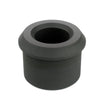
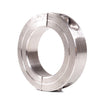
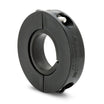
The rotor on the Type B seal is manufactured out of Nitronic 50 stainless alloy machined to a 9Ra finish on precision CNC lathes. It is secured on the shaft with a large locking collar placed in front of the rotor. This collar (clamp) has a dual purpose: It secures the rotor on the shaft and is used as a tool during installation. As on all the PSS seal families, the carbon stator further polishes the rotor during the initial hours of operations. The Nitronic 50 material is a very high grade of stainless steel, which is almost totally corrosion-resistant.

Carbon-graphite is a versatile mechanical seal face material when used with mating rings of a harder material. The PSS carbon has superior wear characteristics and broad chemical resistance.
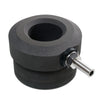
The high density, resin impregnated carbon stator is manufactured from an advanced composite that is first mixed and molded and then formed under pressure. The blank parts are then baked, machined, and lapped to a measured flatness of 4 helium light bands (measured at 0.000044" of variation over its entire lapped surface). The grade of carbon composite used in the PSS Shaft Seal has a maximum operating temperature of 500°F (+260°C) and cannot melt if the seal runs dry for a short period of time, unlike a lip seal or a plastic face seal. In addition, the high density of the carbon greatly increases longevity and wear resistance. Several commercial vessels have recorded over 40,000 (over 4-1/2 years of continuous operation) engine hours on the same original components.
The PSS Type B carbon stator has dual water injection ports for a positive water supply to be plumbed in.

The bellows on both the PRO and Type B PSS seal are constructed out of high temp silicone laminated with either 4 or 5 plies of polyester fabric (aramid in larger sizes) and covered with a layer of fluorosilicone. In addition, both ends of the bellows are sealed so no water can get in the polyester/Aramid fabric. The 4 or 5 fabric inlay provides excellent strength to abrasion and resistance to pressure without loading the silicone. On the larger models, the strength is greatly increased by using stainless steel hoops laid into the convolutions of the bellows.

The PSS Type B Shaft Seal uses metal rings around the bellows for added strength due to the high pressures that the seal may encounter.

For high-speed vessels (12+ knots), a positive water supply is required to be plumbed to the PSS Shaft Seal for lubricating and cooling the seal faces. Please review the PSS Shaft Seal Installation Instructions for more information on pickup points for water supply. In most cases, a slow-speed boat (less than 12 knots) that does not have a bearing the shaft log does not require positive water feed and can be vented. Ideally, the vent line will be run at least 2-3 feet above the waterline and as close to the centerline as possible. This will ensure the vent hose is never below the water line, even with significant heeling. Again, PSS Shaft Seal Installation Instructions have more details on venting the seal.
The rotor on the Type B seal is manufactured out of Nitronic 50 stainless alloy machined to a 9Ra finish on precision CNC lathes. It is secured on the shaft with a large locking collar placed in front of the rotor. This collar (clamp) has a dual purpose: It secures the rotor on the shaft and is used as a tool during installation. As on all the PSS seal families, the carbon stator further polishes the rotor during the initial hours of operations. The Nitronic 50 material is a very high grade of stainless steel, which is almost totally corrosion-resistant.
Carbon-graphite is a versatile mechanical seal face material when used with mating rings of a harder material. The PSS carbon has superior wear characteristics and broad chemical resistance.
The high density, resin impregnated carbon stator is manufactured from an advanced composite that is first mixed and molded and then formed under pressure. The blank parts are then baked, machined, and lapped to a measured flatness of 4 helium light bands (measured at 0.000044" of variation over its entire lapped surface). The grade of carbon composite used in the PSS Shaft Seal has a maximum operating temperature of 500°F (+260°C) and cannot melt if the seal runs dry for a short period of time, unlike a lip seal or a plastic face seal. In addition, the high density of the carbon greatly increases longevity and wear resistance. Several commercial vessels have recorded over 40,000 (over 4-1/2 years of continuous operation) engine hours on the same original components.
The PSS Type B carbon stator has dual water injection ports for a positive water supply to be plumbed in.
The bellows on both the PRO and Type B PSS seal are constructed out of high temp silicone laminated with either 4 or 5 plies of polyester fabric (aramid in larger sizes) and covered with a layer of fluorosilicone. In addition, both ends of the bellows are sealed so no water can get in the polyester/Aramid fabric. The 4 or 5 fabric inlay provides excellent strength to abrasion and resistance to pressure without loading the silicone. On the larger models, the strength is greatly increased by using stainless steel hoops laid into the convolutions of the bellows.
The PSS Type B Shaft Seal uses metal rings around the bellows for added strength due to the high pressures that the seal may encounter.
For high-speed vessels (12+ knots), a positive water supply is required to be plumbed to the PSS Shaft Seal for lubricating and cooling the seal faces. Please review the PSS Shaft Seal Installation Instructions for more information on pickup points for water supply. In most cases, a slow-speed boat (less than 12 knots) that does not have a bearing the shaft log does not require positive water feed and can be vented. Ideally, the vent line will be run at least 2-3 feet above the waterline and as close to the centerline as possible. This will ensure the vent hose is never below the water line, even with significant heeling. Again, PSS Shaft Seal Installation Instructions have more details on venting the seal.
Related Items